


What Type of Toilet Have You Got?
The same two connections do the work on every toilet, but the way you reach and see them depends on the toilet type.
Close-coupled
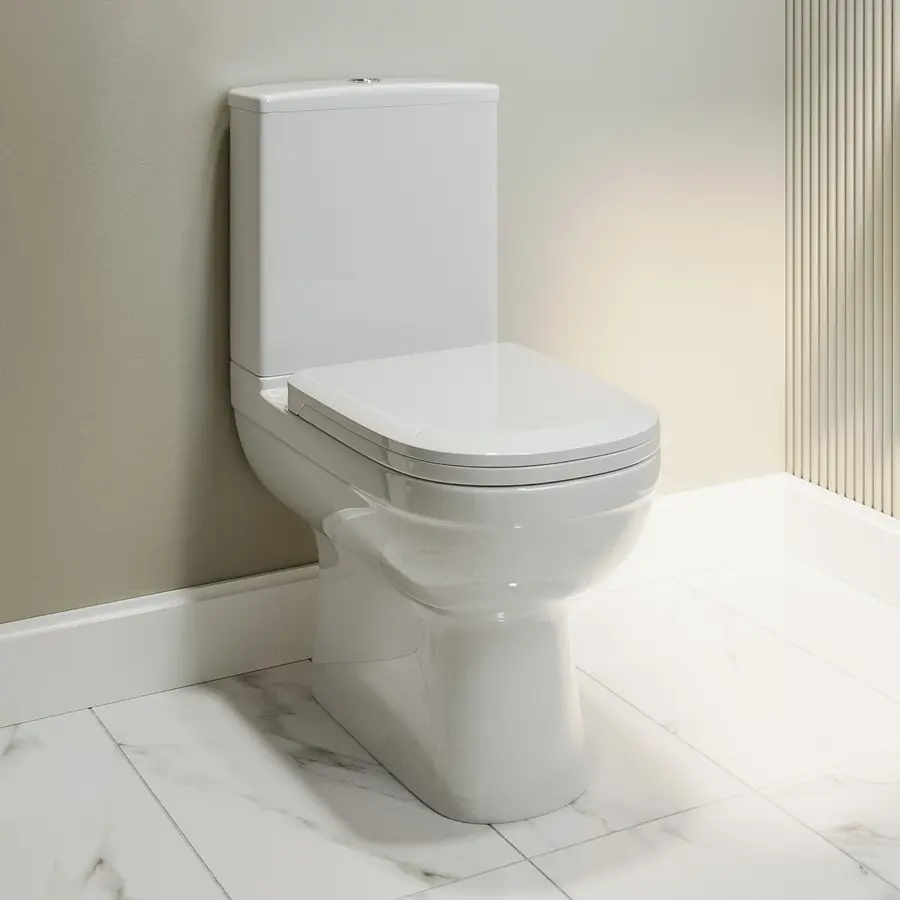
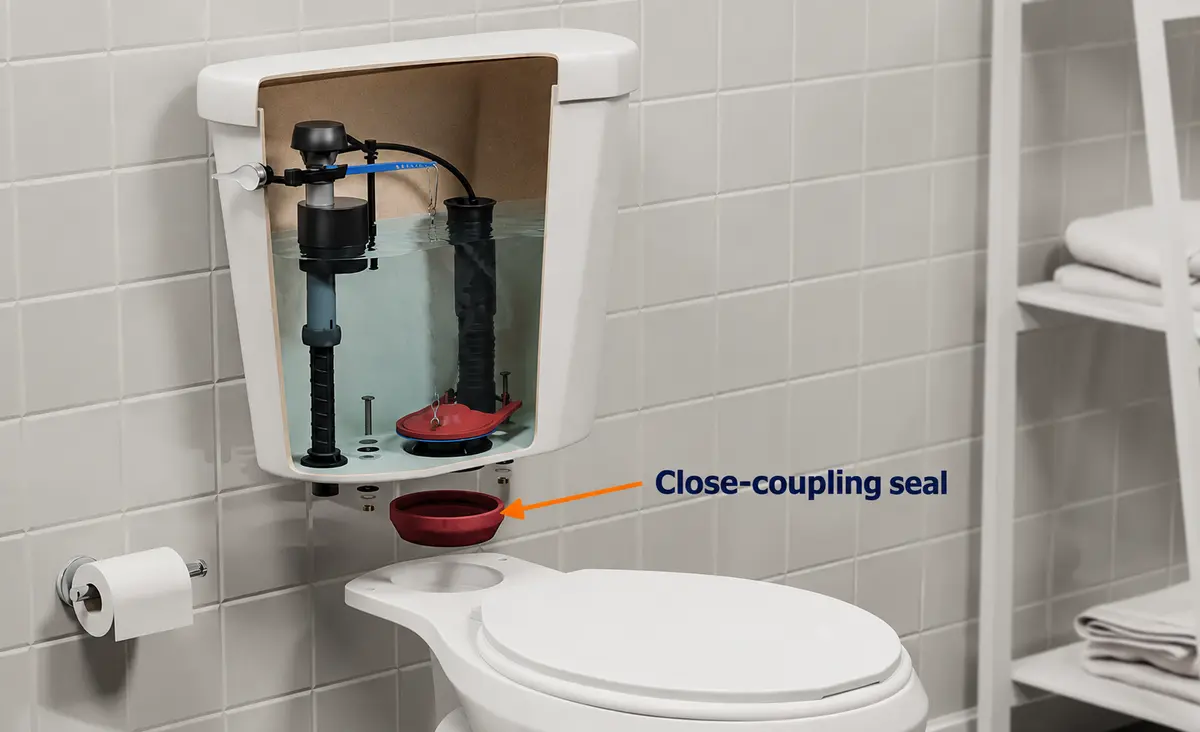
Close-coupling seal between the cistern and pan
The cistern sits directly on the pan. A flush-only leak can come from the close-coupling seal between them or from the pan connector behind the toilet.
Back-to-wall
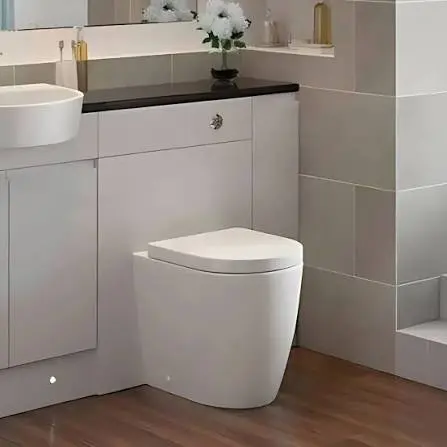
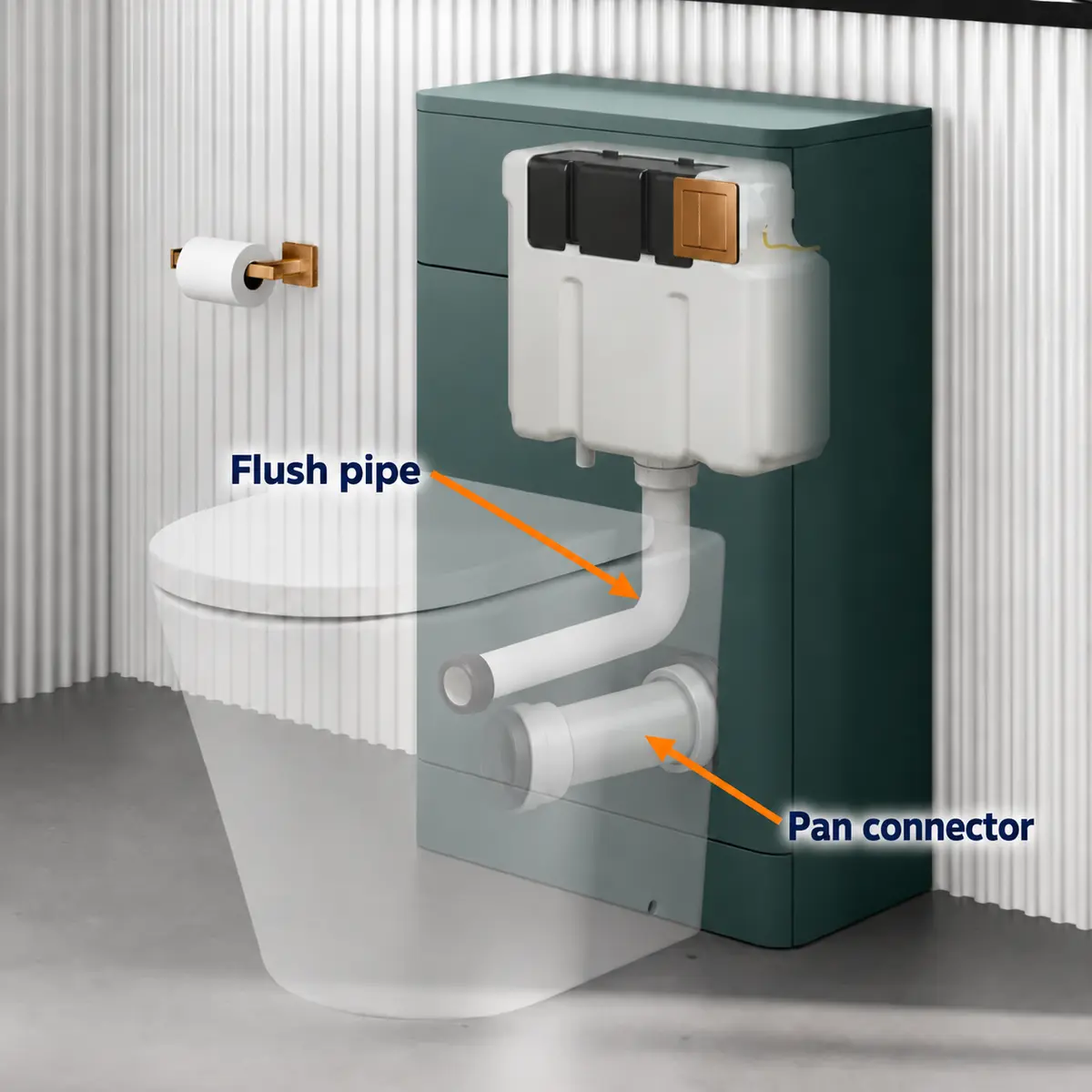
Back-to-wall toilet with both concealed connections visible
The pan sits against the wall or furniture and the cistern is concealed. Both the flush-pipe and waste connections are hidden behind it.
Wall-hung
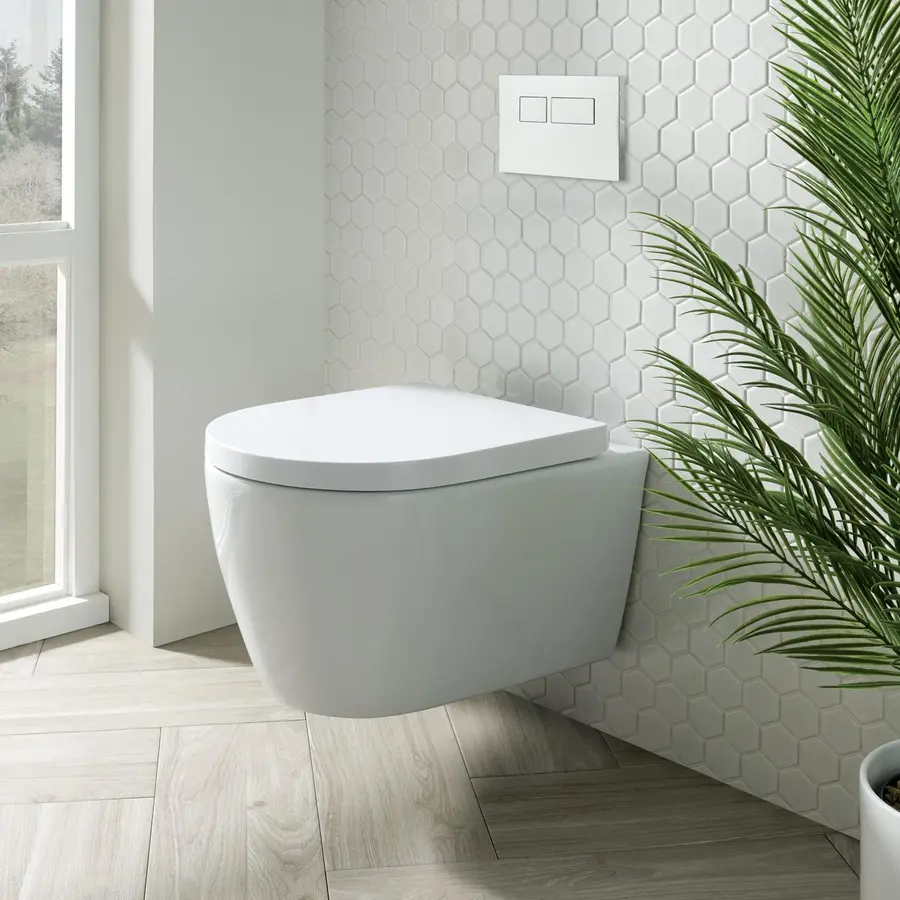
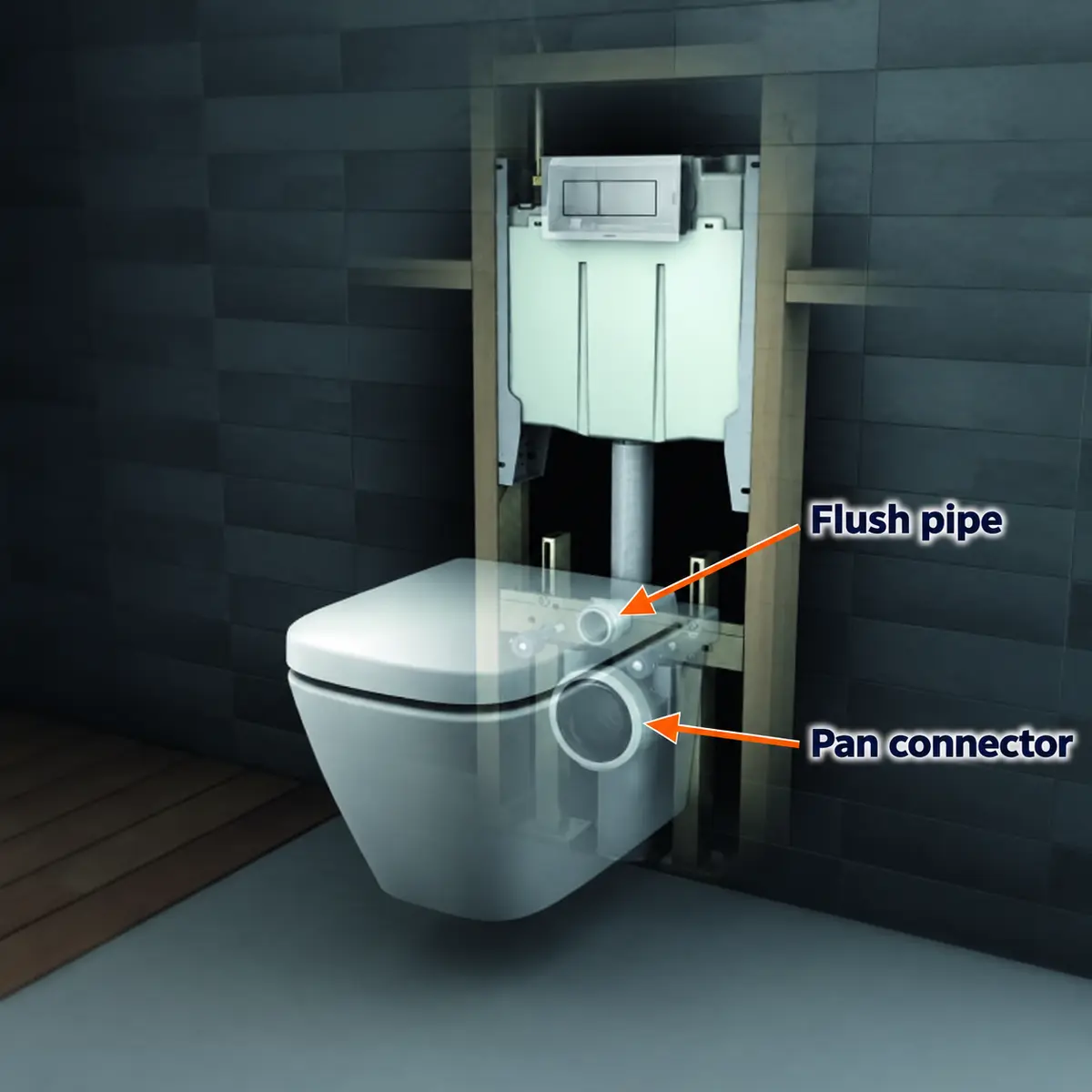
Wall-hung toilet with its concealed connections visible
The pan is fixed to a frame above the floor. The same two water and waste connections are behind it, but the pan usually has to be removed to inspect them properly.
Start With Having a Look
The first thing I do is a visual check. Sometimes the source is blatant: there is still water sitting around the failed connection, or staining shows exactly where it has been running.
A modern dual-flush toilet usually releases roughly three or six litres. That is a fair amount of water, so if the connections are visible, an active flush leak is normally not difficult to spot.
Dripping Water Doesn’t Go Up
In 30 years, I have never managed to get dripping water to go up. That simple fact is useful here.
If you flush the toilet and find water sitting on top of the pan connector, the connector below cannot have put it there. The leak must be starting higher up, which points to the flush-pipe seal or the close-coupling seal.
If the top of the pan connector stays dry but water appears from the connector itself or below it during the flush, the pan connector or its seal becomes the more likely source.
What About a Concealed or Wall-Hung Toilet?
Back-to-wall and wall-hung toilets can be more awkward because the important connections are hidden. If there is useful access from above or through a removable panel, a phone can sometimes help: position it safely behind the pan, record while the toilet is flushed, then review the video for the first sign of water.
If the toilet is fitted tightly against the wall or furniture, there may be no honest way to inspect the seals from outside. If it is leaking, the pan has to come out to be repaired. You cannot leave it leaking. Take it out, have a proper look and see exactly what you are dealing with.
Once it is out, the cause is often obvious. There may be staining down the back of the pan, a distorted flush-pipe seal, or a pan connector that is split, poorly fitted or badly deteriorated. I can show the customer the staining or damage and exactly where the water has been escaping. There is no guesswork.
Do not force a concealed panel or try to pull a fixed pan away from the wall. Removing and refitting it without damaging the sanitaryware or connections is a job for a plumber.
Should I Keep Using the Toilet?
Ideally, stop using it until the leak has been repaired. Every flush sends more water through the failed seal, and that water can damage flooring, furniture or the ceiling below.
If you cannot avoid using it, use it as little as possible, contain and dry any escaped water immediately, and arrange the repair. If the leak is substantial, water is reaching electrics, or it is damaging the room below, stop using the toilet.