The Signs Point the Way—They Do Not Replace Diagnosis
A boiler that constantly cycles, makes circulation noise or never brings the house up to temperature can point towards restricted flow. So can black water from radiators, cold areas, slow circulation and combination-boiler hot water that repeatedly runs hot then cold because the narrow domestic plate heat exchanger is overheating and cooling.
One symptom on its own does not prove that a flush is the answer. I look at the system as a whole and test before recommending one, because I do not want to take a customer’s money for a power flush if the original fault will still be there afterwards.
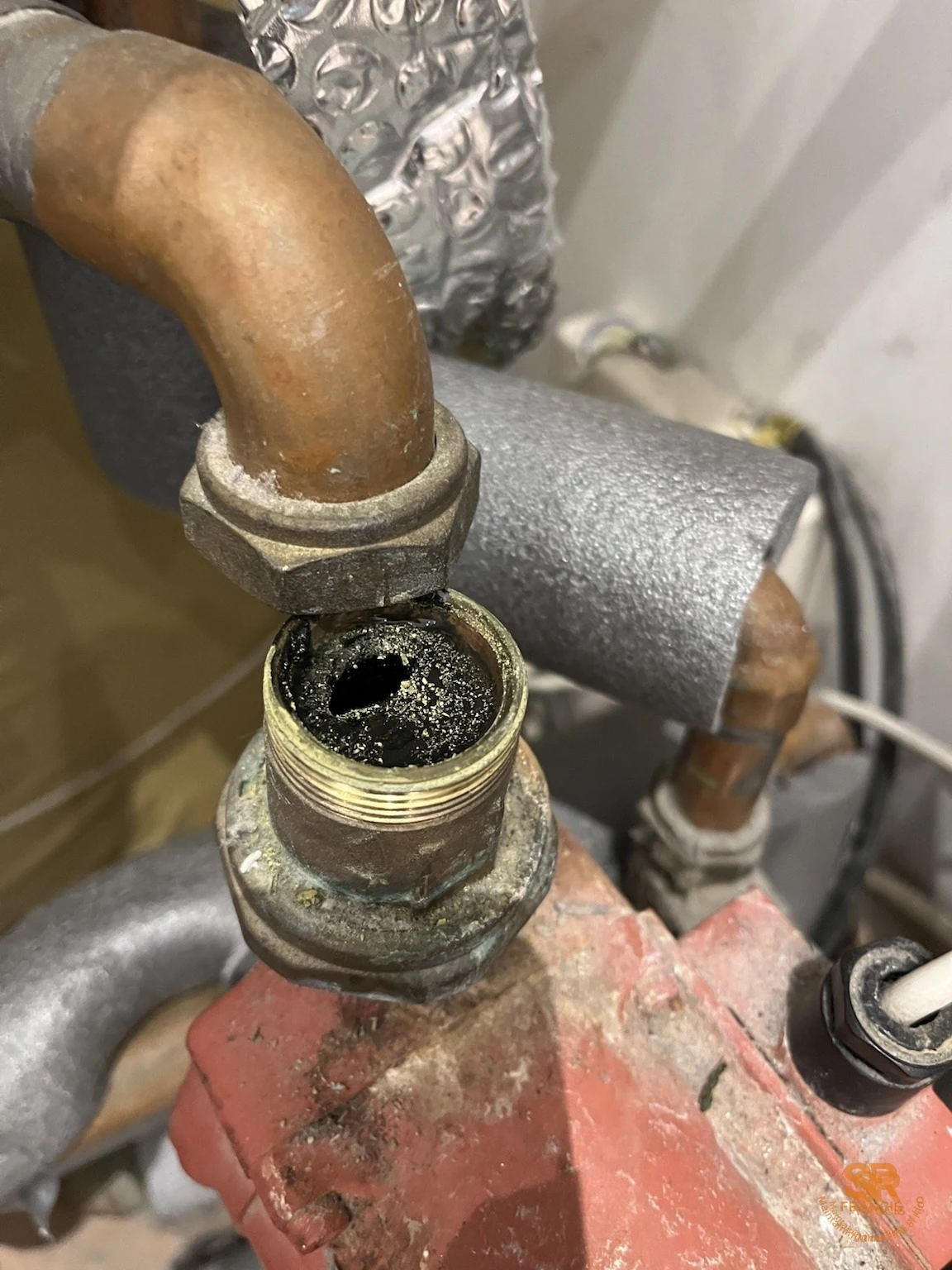
What is the black sludge?
It is mainly magnetite created as the system’s metals corrode over time. It settles in low-flow areas, restricts radiators, blocks valves and can reach the boiler’s smallest waterways. A magnet being attracted beside otherwise non-magnetic copper pipework can be one clue that magnetite is present.
Why a magnetic filter is not a cure
A filter helps protect a clean system and should be serviced, but fitting one does not remove years of settled contamination from every radiator and pipe. It is the same principle as replacing an engine and pouring the old oil back in: a new boiler deserves clean system water.
How I Flush the System
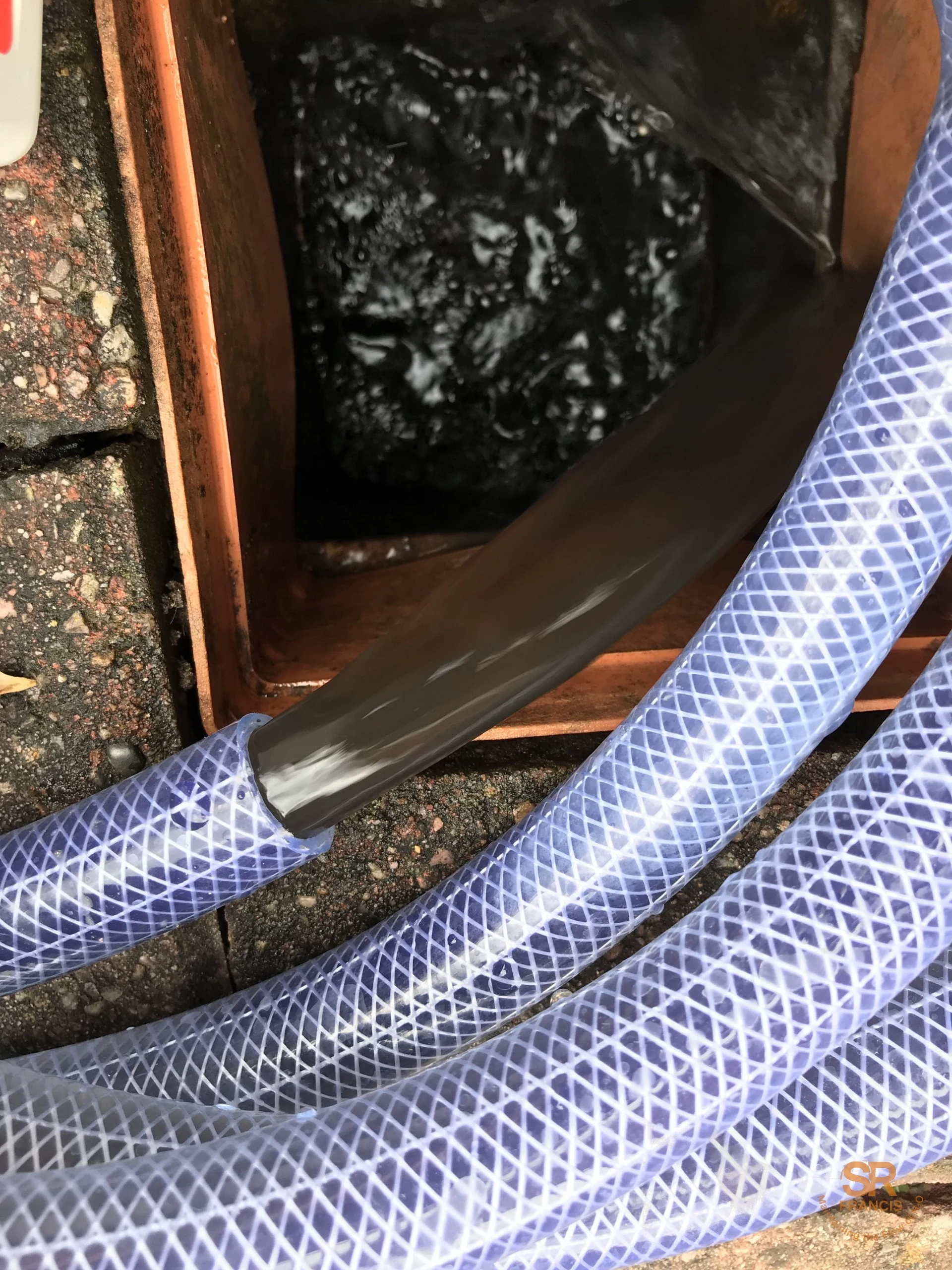
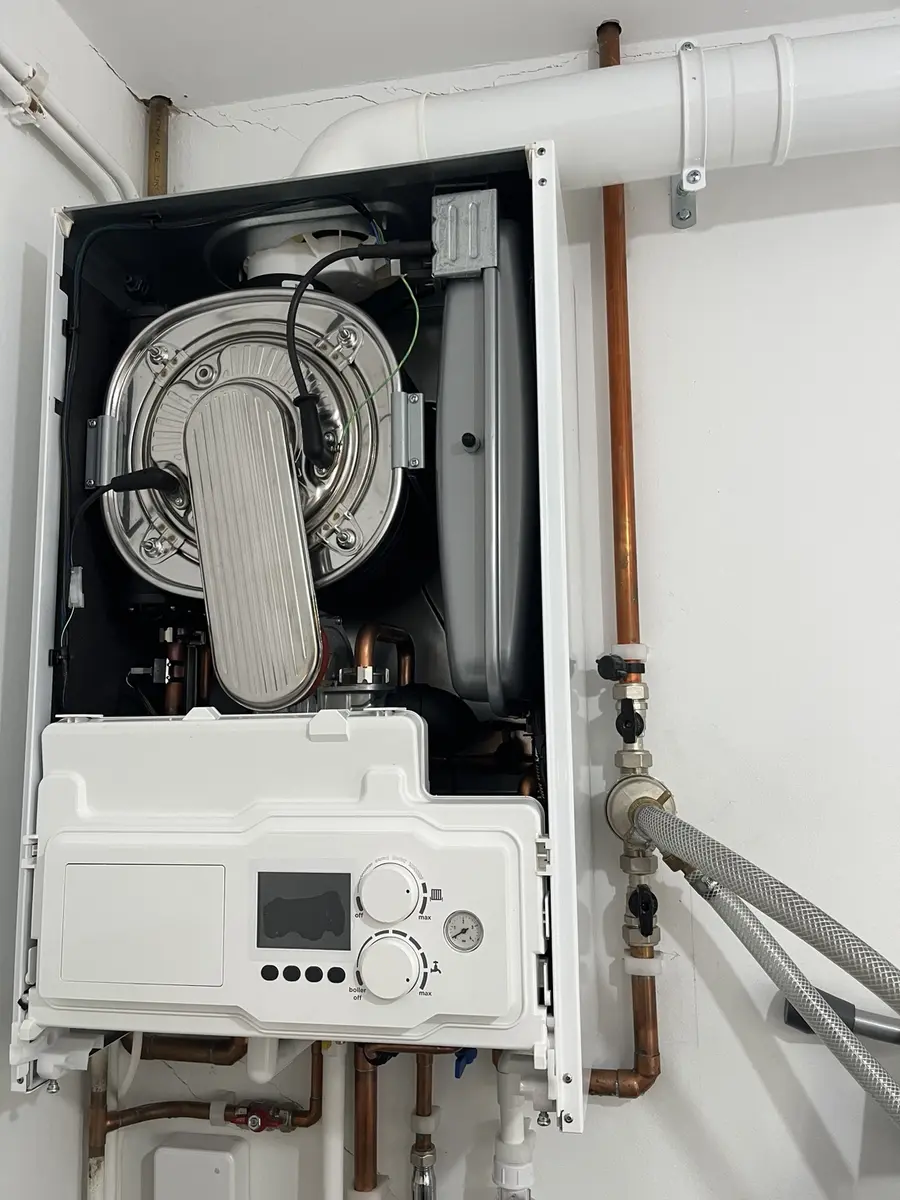
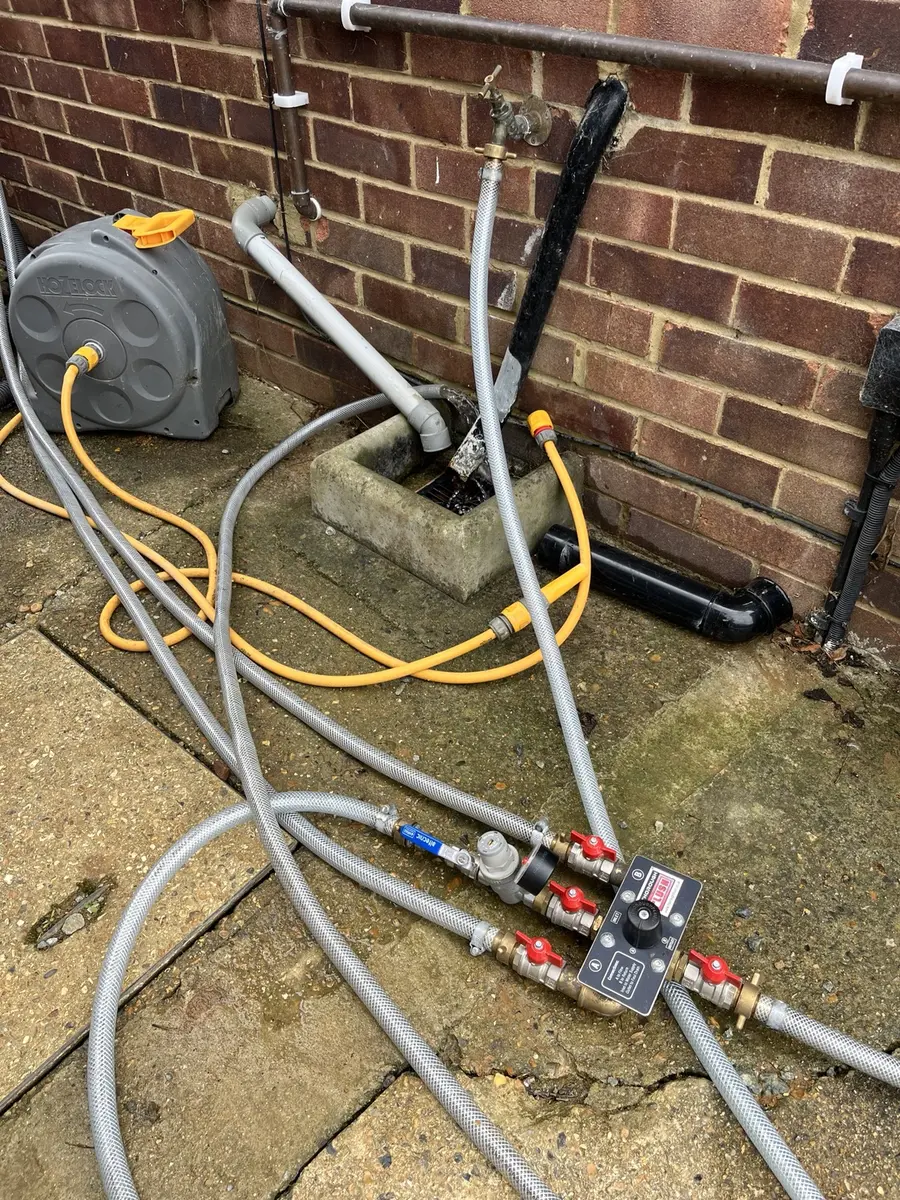
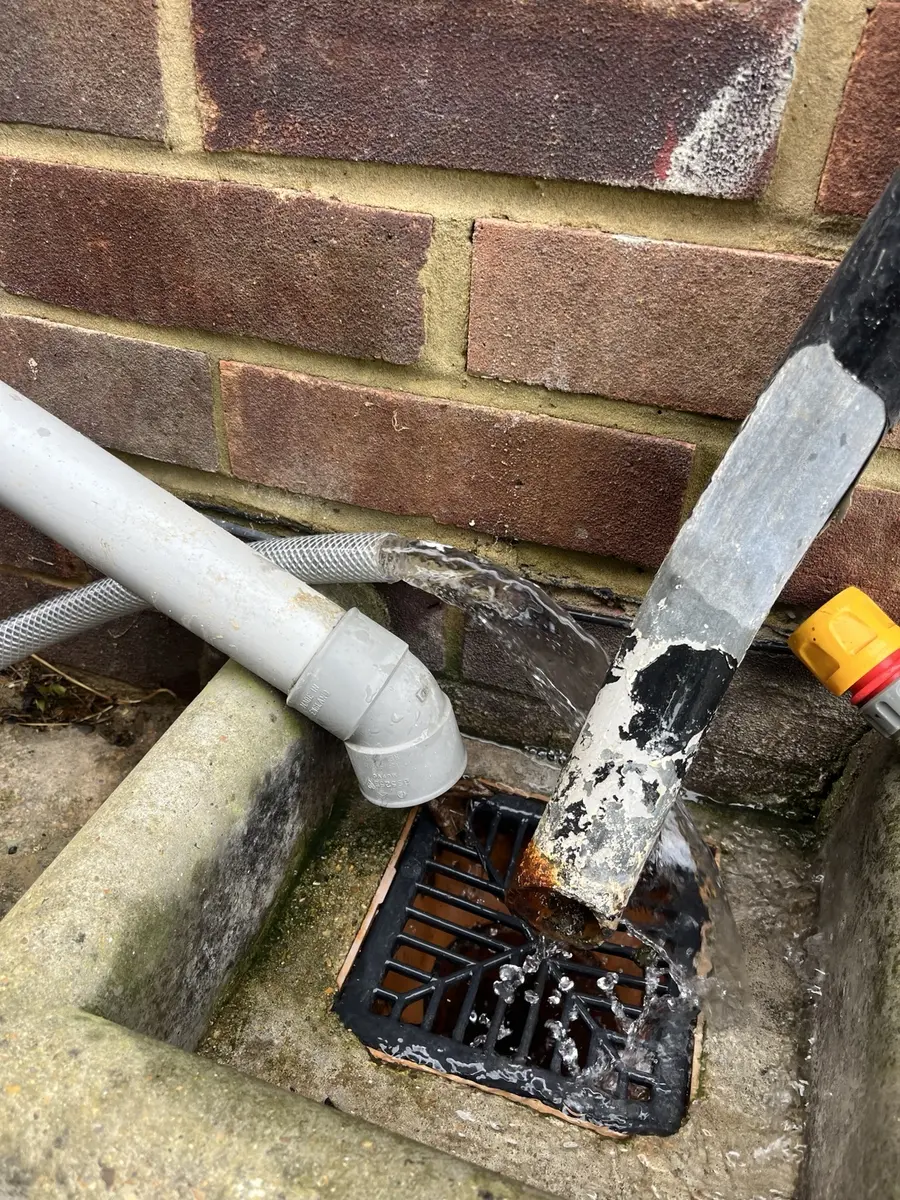
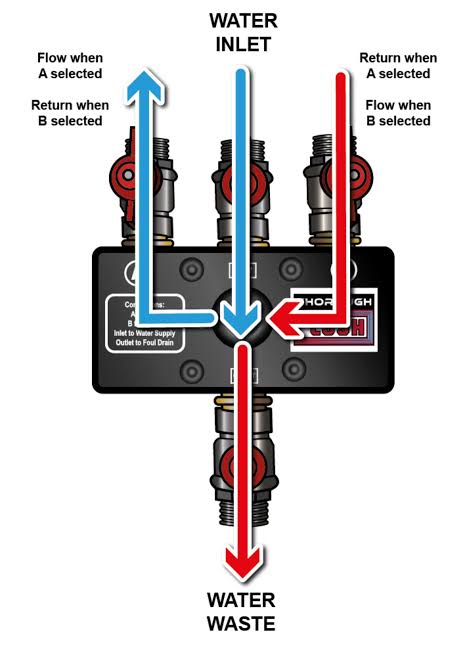
Where appropriate, I connect the flushing equipment, control the open vent and feed on an open-vented system, and isolate the boiler and radiators so the water can be driven through one radiator at a time. Each radiator is flushed until the discharge runs clear, then isolated before moving to the next. That prevents a cleaned circuit from being immediately contaminated again.
If one circuit refuses to flow while the others clear, the flushing process also helps narrow down the location of a blockage. Some restrictions need vibration or physical intervention; occasionally a blocked section of pipe must be located and replaced.
Why the price and duration vary
Heating-system cleaning starts from £450.
Six radiators and sixteen radiators cannot cost the same, and nobody can know exactly how stubborn the contamination will be before circulation starts. A smaller system may clear in half a day; a large or badly restricted system can take a long day. Once started, it needs to be continued methodically until the water runs clear, then refilled with inhibitor and checked.