


Pump and zone valve
The pump must circulate water and the zone valve must open when the controls call for heat. A failed pump or valve can make an otherwise healthy manifold appear dead.
A clean, comfortable way to heat your home — with the right system chosen for the floor you've actually got. I install new wet underfloor heating systems and also diagnose and repair existing systems that aren't working properly.
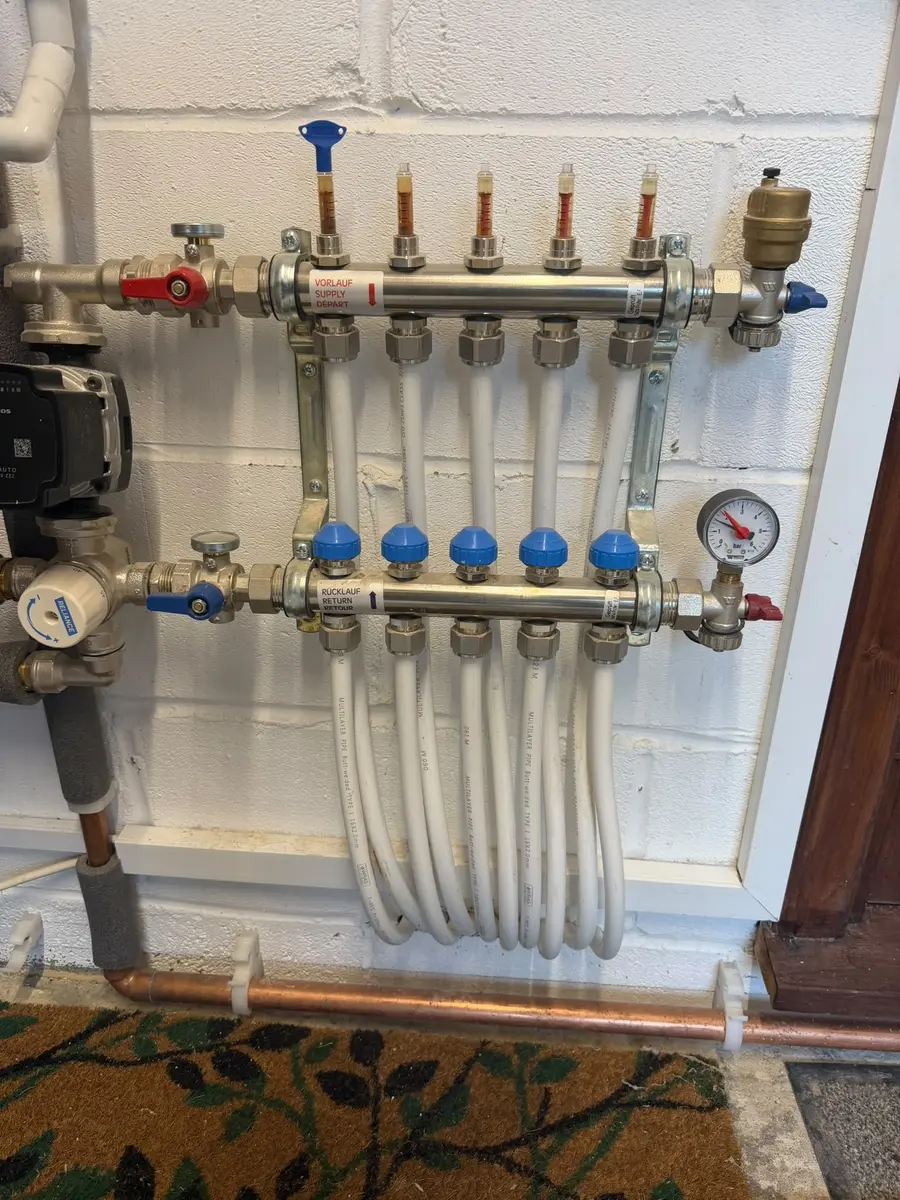
Customers usually call because the whole system is cold, one area will not heat, the floor never feels warm enough or there are cold patches. Wet underfloor heating is easier to understand if every loop is treated like a radiator: it has a flow and return, an actuator at one end and a flow meter balancing the other.
The pump must circulate water and the zone valve must open when the controls call for heat. A failed pump or valve can make an otherwise healthy manifold appear dead.
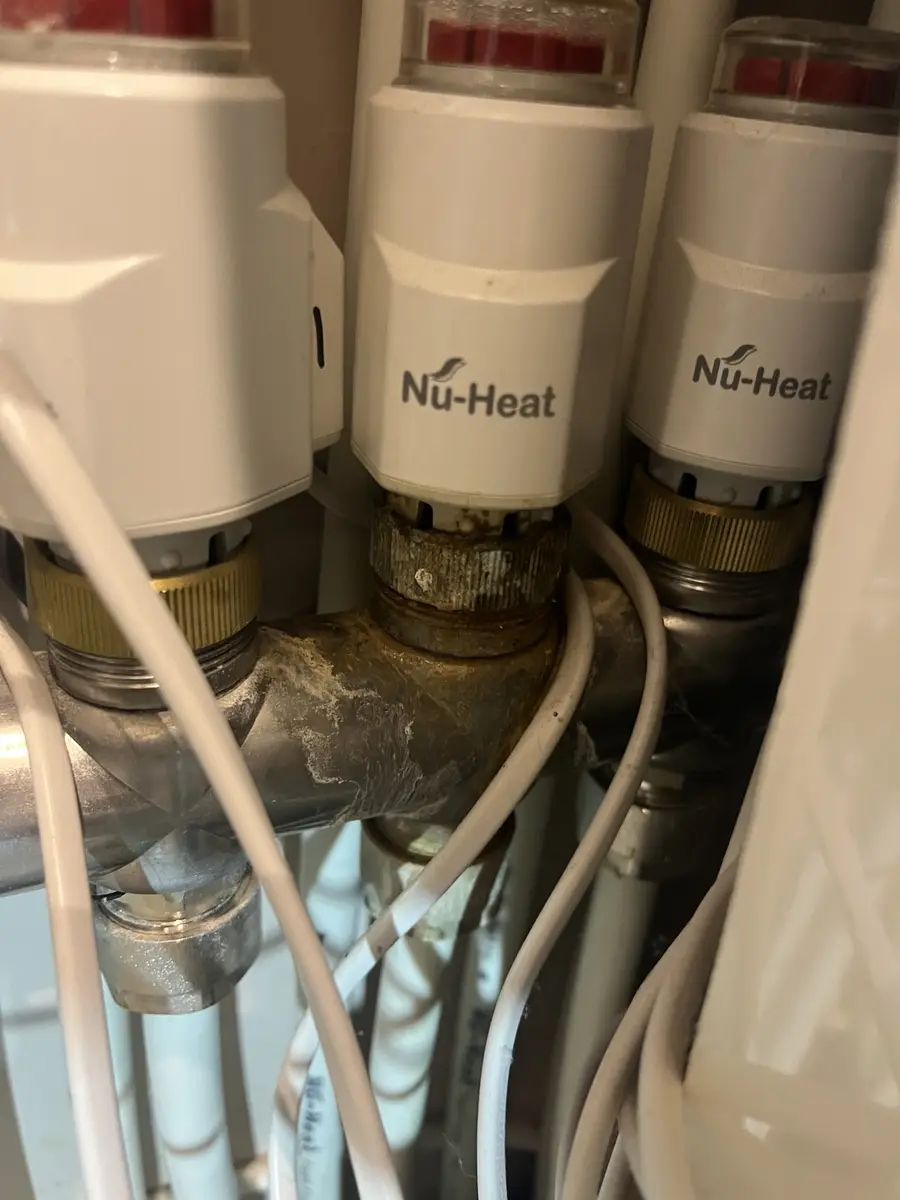
Each room thermostat normally asks an actuator to lift and open its loop. Failed actuators, stuck pins, wiring-centre faults or lost thermostat signals can leave individual rooms cold.
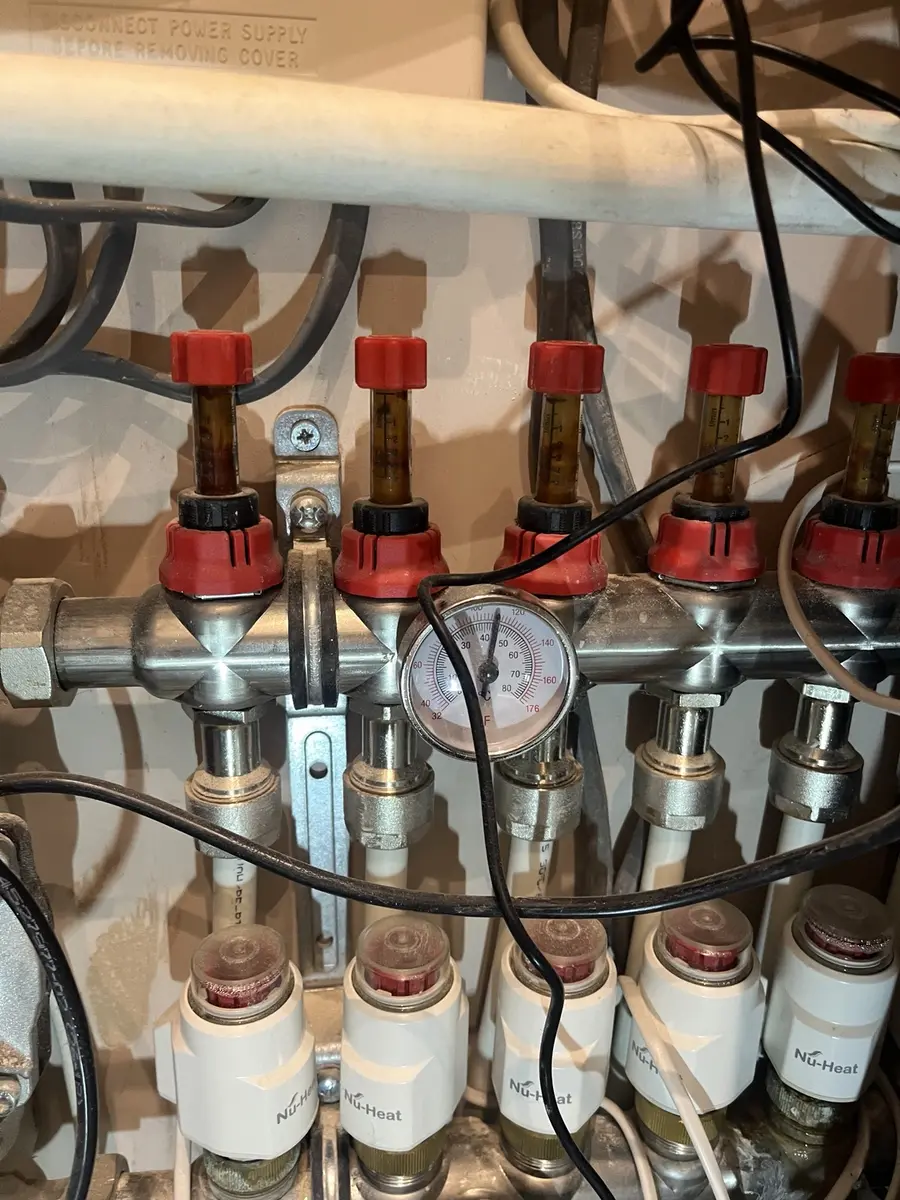
The flow meters show whether water is moving through each loop and allow the circuits to be balanced. No flow may be a closed valve, air, contamination or a restriction—not automatically a failed boiler.
The thermostatic blending valve controls the lower water temperature required by the floor. If it sticks or fails, the system may circulate but never receive the temperature it needs.
Diagnosis is a £70 call-out. I repair and replace pumps, zone valves, actuators, blending valves, flow meters and complete manifolds, and I deal with leaks. Model-specific manifold parts are not sensible to carry for every manufacturer, so I photograph and identify the system, confirm availability with the supplier and rebook with the right components where necessary.
Yes. On mixed radiator and underfloor systems, magnetite can travel into the floor loops and settle in the lowest part of the installation. Slow flow or cold areas across a loop may justify flushing that section—but only after the pumps, valves, actuators and flow settings have been checked.
A customer called because the flow meters looked dirty. Inspection showed mould inside the clear meters, where a small pocket of warm air and water can support bacterial growth if the system has not been treated with biocide. The heating itself was circulating correctly and did not need flushing. The useful finding was evidence of small leaks around two actuators, so I identified the manifold and contacted the manufacturer for the correct replacement parts.
“Steve sorted our underfloor heating and had the patience of a saint explaining how it all worked to our young son. Really nice guy and would highly recommend him.”Sarahelockyer — Google review
Underfloor heating spreads warmth across the floor rather than relying on a few hot radiators around the room. It can run effectively at lower water temperatures, gives you back valuable wall space and is particularly well suited to modern low-temperature heating.
No radiators taking up wall space and a more even spread of warmth across the room.
A properly designed wet system can heat effectively at lower flow temperatures than traditional radiators.
If a heat pump is part of your future plans, correctly designed underfloor heating can put the property in a strong position for lower-temperature heating.
I don't believe in using the same underfloor system everywhere. The floor construction makes a huge difference to what I recommend.
For timber floors and suitable retrofit situations, I like proven low-profile board systems such as the OMNIE products now available through Nu-Heat. They allow wet underfloor heating to be incorporated without a traditional deep screed.
Where the existing screed is suitable, my preferred approach is often to mill channels directly into the floor and install the heating pipework into them. That avoids unnecessary floor-height build-up and puts the pipework close to the finished surface.
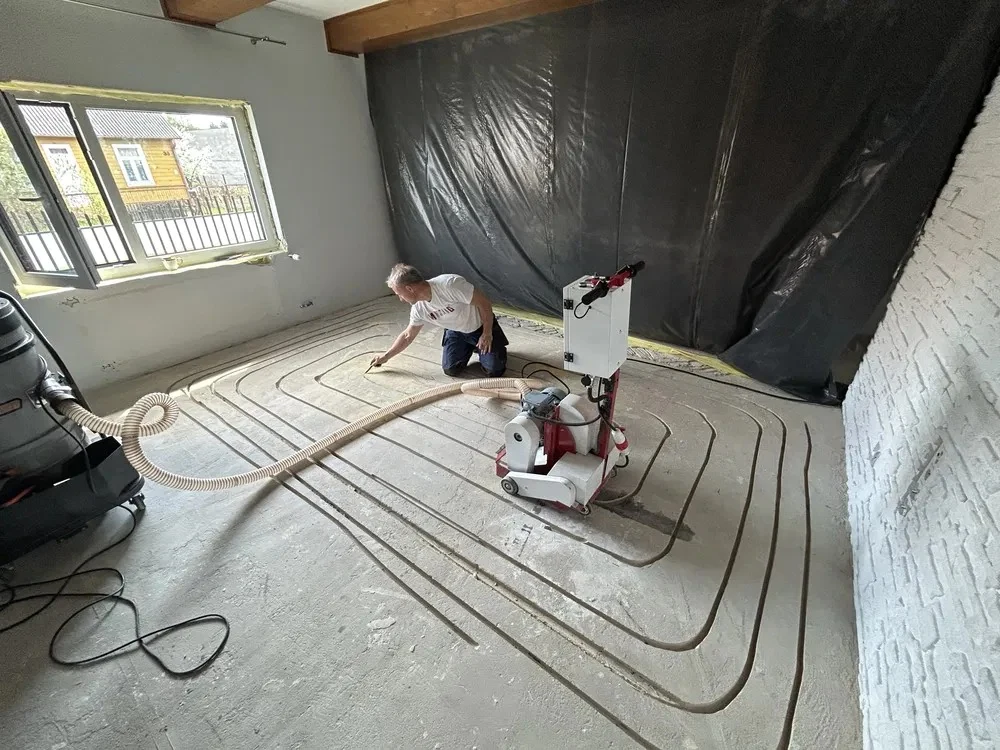
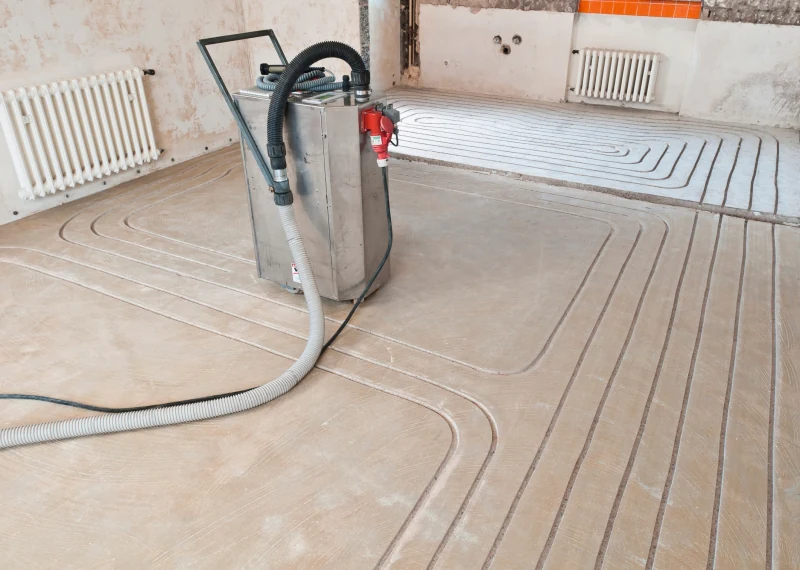
Floor milling sounds messy, but the specialist milling equipment we use is connected to powerful dust extraction while the channels are being cut. That keeps dust and disruption to a minimum and makes the process far cleaner than many homeowners expect.
Underfloor heating can work with a wide range of finished floors, including tiles, stone, engineered timber, vinyl/LVT and suitable carpet. The important thing is to consider the finished floor as part of the design, because different materials transfer heat differently.
For a new installation I normally involve the system manufacturer in the design. Floor construction, room heat losses, pipe layouts, circuit lengths, manifold position and controls all need to work together.
I can work with specialist manufacturers such as Nu-Heat to get the system specified around the actual property and plans.
Some homes suit one simple ground-floor zone. Others benefit from individual room control — especially where bedrooms, kitchens and living areas need different temperatures.
Wet underfloor heating can work alongside radiators and can be incorporated with existing boiler systems, including combination-boiler installations, when designed and controlled correctly.
This is a big part of the work I do. A cold room or dead zone doesn't automatically mean there's a leak under the floor or that everything needs digging up.
Thermostats, wiring centres and controls can all cause individual zones — or the whole system — to stop behaving properly.
Actuators, pumps, valves, flow settings and manifold components can be tested, repaired or replaced as required.
If some areas heat well and others don't, the problem may be flow, balancing or circulation rather than the pipe buried in the floor.
I've used and liked OMNIE systems for years. OMNIE's board products, including LowBoard 2, are now available through Nu-Heat, so I can continue using those types of systems where they're the right fit for the project.
Give me a call and tell me what you've got or what you're planning. If it's easier, send me some photos, plans or a short video on WhatsApp first and I'll point you in the right direction.